
The Confident Communicator: A Workshop on American English Pronunciation and Idioms
In today's globalized world, English communication has become an essential core skill in many professional fields. American English, in particular, has become a key focus for many English learners due to its widespread use in international business, technology, and media.
However, many people, even with a rich vocabulary and correct grammar, still experience difficulties or lack confidence in real-world communication. This often stems from a lack of two key components: natural pronunciation and authentic expressions (idioms).
This article will explore the importance of systematically studying American pronunciation and idioms in improving English communication skills, and how learners can develop clear, confident, and effective communication skills through specialized courses.
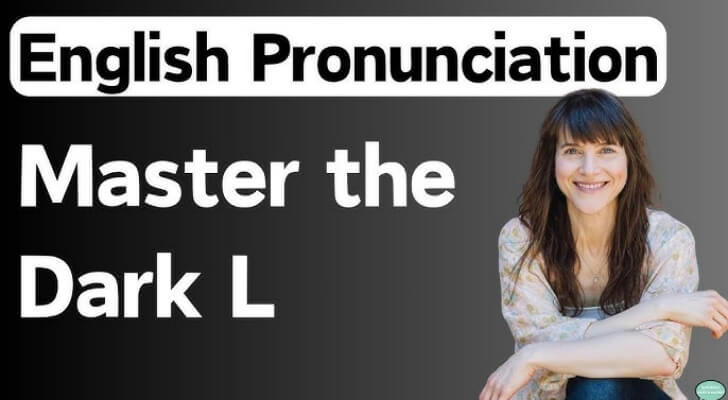
Why are pronunciation and idioms so crucial?
✅ Pronunciation is the "first impression" of communication.
Clear voice and intonation not only help listeners understand but also make speakers more confident. Research shows that over 40% of communication barriers for non-native speakers stem from unclear or unnatural speech rhythm.
According to research published in the International Journal of Applied Linguistics, when listeners have to guess pronunciation, conversation efficiency decreases significantly, and trust in communication weakens.
✅ Idioms are the "ticket" to cultural understanding
American English idioms (such as "hit the ground running," "under the weather," and "cut to the chase") appear frequently in workplace communications, social conversations, and the media. Failing to understand these expressions can often lead to missing out on the true meaning of a message or the humor of the communication.
The Journal of Language and Sociology notes that learners who are familiar with common idioms can better grasp context, express themselves more eloquently, and build relationships more easily.
What does learning American pronunciation involve?
A systematic American pronunciation training program typically covers the following areas:
1.Phonemes and Syllables
Standard pronunciation of vowels and consonants
Identifying and using stressed syllables
Practice with commonly confused sounds (e.g., /θ/ and /s/, /r/ and /l/)
2.Intonation and Rhythm
Intonation curves and emotional expression in sentences
Linked speech, weak pronunciation, and swallowing
Rhythmic practice (e.g., poetry recitation, dialogue imitation)
3.Listening Training
Identifying subtle changes in the flow of a native speaker's speech
Imitating common expressions (e.g., news broadcasts or movie dialogue)
Improving listening response speed and comprehension

Key Points for Learning American Idioms
Effective idiom training involves more than just rote memorization; it involves contextualizing the practice.
1.Everyday Communication Scenarios
Greetings and Small Talk ("How's it going?", "Long time no see.")
Expressing Emotions ("blow off steam", "feel blue")
Discussing Opinions ("a tough call", "on the same page")
2.Workplace Communication Scenarios
Expressing Opinions in Meetings ("think outside the box", "take it offline")
Time Management and Planning ("beat the clock", "on the back burner")
Teamwork Terminology ("pull your weight", "back to square one")
3.Media and Cultural Understanding
News Headline Language Style
Common Expressions in TV Shows and Podcasts
Social Media Phrases (e.g., "FOMO", "YOLO")
The National Language Center states that mastering the 200 most common American idioms is sufficient to cover over 80% of daily communication situations and is an important stepping stone to improving language fluency.
Who is suitable for this type of English workshop?
Learning American pronunciation and idioms is particularly helpful for the following groups:
✔ Those working in multinational companies or English-speaking workplaces
✔ Professionals looking to improve their presentation, meeting communication, and social communication skills
✔ Those planning to immigrate, study abroad, or settle in North America
✔ Those with a basic understanding of English but lacking speaking confidence
Research by American linguist Patricia Kuhl indicates that even adults outside of their critical language development period can still effectively develop a speech system through a combination of conscious imitation and frequent repetition.
Learning Methods and Practical Tips
While daily practice is helpful, systematic learning is a more effective way to address the "dumb English" problem:
✅ Use audio recordings to compare your pronunciation with native speakers.
✅ Read and recite a passage of English material daily, focusing on intonation.
✅ Focus on learning 10 idioms each week and use them in sentences or recorded conversations.
✅ Improve your sensitivity to authentic expressions by listening to podcasts, watching American TV series, and more.
Furthermore, a study published in the journal Language Learning and Technology showed that participants who participated in structured pronunciation and idiom courses saw an approximately 26% increase in English fluency after three months.

Conclusion: Language is not a burden, but a bridge to understanding.
The ultimate goal of language learning isn't perfection, but rather making communication more natural and effective. Mastering pronunciation and idioms not only increases your confidence in speaking but also provides a deeper understanding of cultural background, thinking patterns, and emotional expression.
🌎 When you can say “Let’s call it a day” or “Don’t sweat it” naturally, you are not just speaking English, you are truly thinking and living in English.