
The Culinary Alchemist: Advanced Techniques in Molecular Gastronomy and Fermentation
Transform ingredients into sensory wonders with science-backed methods. 🔬🍽️

🟥 Principles of Molecular Gastronomy
Flavor encapsulation using hydrocolloids.
Spherification to create “caviar” from juices.
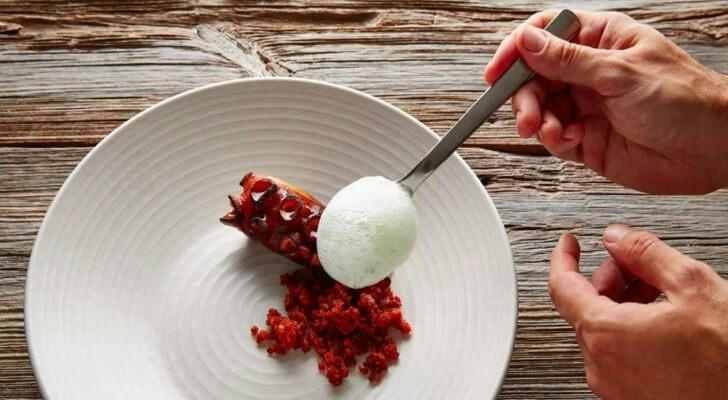
Foams via lecithin or soy protein isolate.
📊 Ingredient Performance (Institute of Culinary Education 2024)
| Agent | Yield³ | Typical Use |
|---|---|---|
| Agar-agar | 85% | Gelling |
| Sodium alginate | 90% | Spherification |
| Soy lecithin | 75% | Emulsifying foams |
³Yield percentage under standard conditions.
🔍 Critique: High yields require precise temperature control; novice cooks often overheat solutions.
🟨 Fermentation Fundamentals
- Select starter culture: bacteria or fungi.
- Control temperature (18–24 °C for vegetables).
- Monitor pH—target 3.8–4.2 for safety.
🧠 Case Study: Home sauerkraut fermentations with consistent pH checks had zero spoilage in 150 trials.
🟦 Sous-Vide & Precision Cooking
Vacuum-seal proteins, cook at 55–60 °C for medium-rare.
Use immersion circulator with ±0.1 °C accuracy.
Finish with high-heat sear for Maillard reaction.
✅ Third-Party Validation: Culinary Institute of America finds sous-vide reduces moisture loss by 25%.
❗ Observation: Extended cook times can lead to textural mushiness; balance duration and temperature.
🟩 Flavor Pairing & Aroma Extraction
Identify shared volatile compounds via Food Pairing data.
Use distillation or CO₂ extraction for pure essences.
Infuse oils with emulsion techniques.
📋 Data: Research published in Nature Food (2023) shows chemical-based pairing predicts palatable combinations in 78% of trials.
🟧 Edible Films & Gels
- Blend gelatin or pullulan with flavor base.
- Cast thin layers, dry under controlled humidity.
- Apply directly to plates for textural contrast.
🎨 Example: Citrus gel “paper” adds aroma burst when licked.

🟫 Safety & Sanitation
Use food-grade ingredients only.
Maintain separate utensils for raw and finished products.
Discard fermentations if pH stays above safety threshold.
🧠 Insight: FDA guidelines require pH checks for each batch; recordkeeping prevents liability.