
The Urban Arborist: Mastering Tree Care, Pruning, and Landscaping
A short welcoming sentence explaining why understanding tree care in American cities matters today—because healthy urban trees offer real benefits.
🌳 Tree Benefits in U.S. Cities (Color: teal)
Urban trees deliver ecosystem services through shade, cooling, air cleaning, and carbon capture.
According to USDA data, about 5.5 billion trees in urban areas (covering 39.4% canopy) provide an estimated $18.3 billion per year in value: air pollution removal ($5.4 billion), energy savings ($5.4 billion), carbon sequestration ($4.8 billion), and avoided pollutant emissions ($2.7 billion) .
Carbon sequestration and particulate capture reduce respiratory illnesses and healthcare strain.
Data Table: Annual Urban Tree Value by Benefit
| Benefit category | Annual Value (US$ billions) |
|---|---|
| Air pollution removal | 5.4 |
| Building energy savings | 5.4 |
| Carbon sequestration | 4.8 |
| Avoided emissions | 2.7 |
| Total | 18.3 |
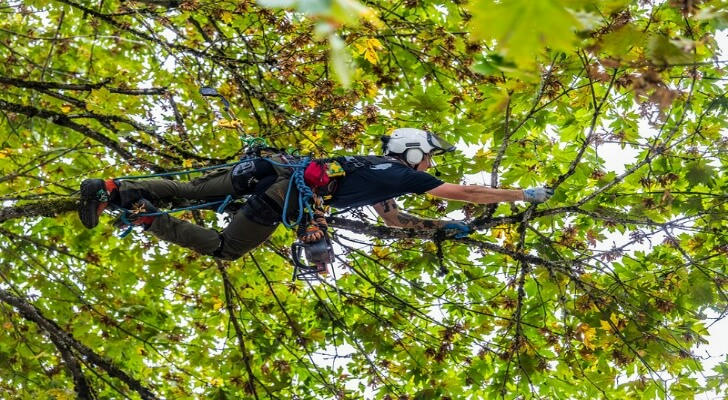
✂️ Pruning Practices for Longevity (Color: green)
Routine pruning of young trees within the first 10 years and mature trees every five years significantly extends lifespan and ecosystem service potential.
A modeling study found scheduled pruning every six years with 1% annual mortality captures around 93.5% of possible ecosystem benefits.
Poor pruning—such as topping—can create decay, hazards, and aesthetic harm; strong branch attachments degrade, raising risk in storms.
How to prune in practice:
Young tree formative pruning across years 2,4,6,8,10 to encourage one central leader with well‑spaced branches.
For mature trees, remove deadwood (deadwooding) while avoiding large cuts near canopy entry points.
Always assess species cycle: pruning needs vary across life stage and species for optimal root growth and photosynthetic capacity.
🌎 Equity and Canopy Coverage (Color: blue)
The 3‑30‑300 rule suggests each residence, school or workplace should view at least 3 trees, live in a neighborhood with 30% tree canopy, and be within 300 m of a park .
A recent study found most U.S. cities fall short; even tree‑view is often met, canopy percent often not.
Environmental justice concerns: neighborhoods with historical disinvestment feature lower canopy and greater heat stress.
Example case: Denver‑Aurora metro still holds just 16.7% canopy cover—unchanged over five years—and well below similar cities (average ~17.9%). Heat in treeless areas now contributes to thousands of deaths annually.
🛠️ Practical Care Workflow (Color: orange)
Site assessment: measure canopy percent, identify species diversity, check for compaction or storm damage zones.
Formative pruning schedule: first prune at 2 years, repeat at 4,6,8,10; inspect structure and train dominant trunk.
Ongoing maintenance: mature tree inspections every five years; remove deadwood but avoid topping.
Plan replacement plantings: focus diversified native species to resist pests, reduce risk, and improve resilience—example: replacing over‑maple canopy in Midwestern village with redbud and chokecherry enhanced diversity.
😊 Health and Psychological Benefits (Color: purple)
A California study found neighborhoods with more trees correlated with lower obesity, better general health, and improved social cohesion in adults aged 1864.
Additional research links tree cover with reduced stress and fewer asthma cases, especially for children in the Bronx where low canopy areas show childhood asthma rates around 17% vs 11% citywide.
Cooling effect: a 10-meter radius of trees lowers daytime air temperature by 0.7 °C; a 60-meter radius by 1.5 °C—reducing heat‑related mortality, estimated 1,200 lives saved annually in U.S..
🔍 Third‑Party Verification & Critical View (Color: red)
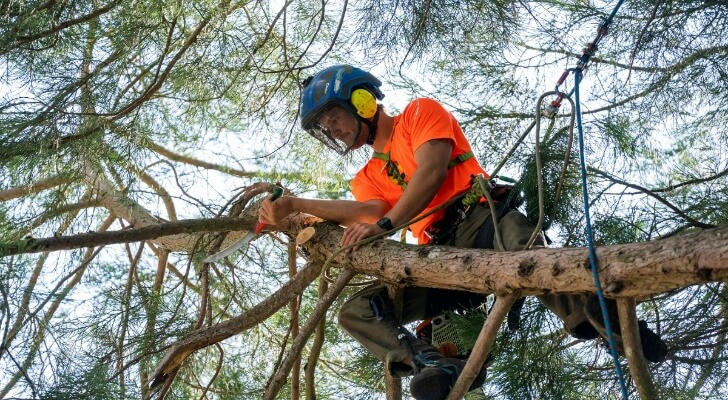
USDA Forest Service research supports canopy value estimates and pruning schedules as cost‑effective interventions.
The Arbor Day Foundation and U.S. Forest Service mapping show stark disparities: cities like D.C. reach nearly 40% canopy, while fast‑growing suburbs or dry climates lag behind.
Critique: much canopy benefit modeling assumes uniform growth and low mortality; real‑world pruning quality, species choice, and tree removal rates vary. Models may over‑estimate ecosystem services potential if neglecting high stress zones or improper maintenance.
🌱 Case Study: Tucson’s Drought‑Smart Approach (Color: brown)
Facing extreme heat and drought, the city prioritized drought‑tolerant native trees such as velvet mesquite.
A “storm‑to‑shade” system captures rainfall in curb‑side pits to support tree survival with minimal watering.
Canopy now expanding intentionally in underserved neighborhoods, aiming to align with equity goals while optimizing water use.
✅ Summary Highlights
Urban trees contribute billions in environmental, health, and economic value.
Pruning young and mature trees on schedule retains canopy function and reduces hazard.
Equity considerations demand canopy expansion in underserved areas.
Simple metrics like 3‑30‑300 standardize planning and equity measurement.
Integrating local case studies (e.g. Tucson, Denver) illustrates real‑world challenges and strategies.
By mastering thoughtful pruning, selective planting, and equity‑focused canopy planning, Arborists and urban managers help build healthier, cooler, and more resilient cities—while improving quality of life one tree at a time 😊.